How to trade Solana (SOL)
BRVX lists Solana as a SOL/USDT perpetual with leverage up to 150x, one of three markets at the top of the range, and a 0.08% fee to open. You bet on SOL's price going up or down and settle profit or loss in your margin token.
- 150x Max leverage on SOL
- 0.08% Fee per side on SOL
- 0.016% / 0.0103% Funding long / short on SOL
- 6 Margin tokens for SOL
Solana guide contents
What a Solana perpetual is
Solana is a high-throughput blockchain popular for memecoins, trading apps and payments. SOL, its token, is among the most volatile large-cap coins.
The BRVX SOL perp tracks the token price with no expiry date; there is no wallet, no staking and no on-chain transfer.
What moves the SOL price
Solana tends to amplify whatever the crypto market is doing.
- Memecoin and trading volume on the chain, which lifts demand for SOL to pay fees.
- Network outages or congestion, which in the past triggered sharp sell-offs.
- ETF filings and approvals for SOL products, and flows once they trade.
Long or short Solana?
A SOL long rides busy memecoin seasons and new ETF demand, when fees on Solana rise with activity.
A SOL short bets on cooling speculation or a network incident; Solana has fallen hard when activity dried up.
Opening a SOL long or short on BRVX
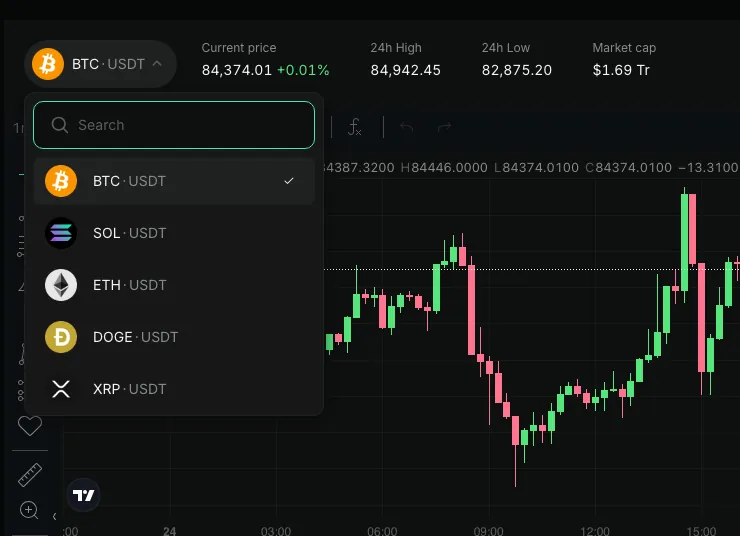
Choose SOL · USDT
Pick SOL from the crypto group in the pair selector.
Size the SOL position
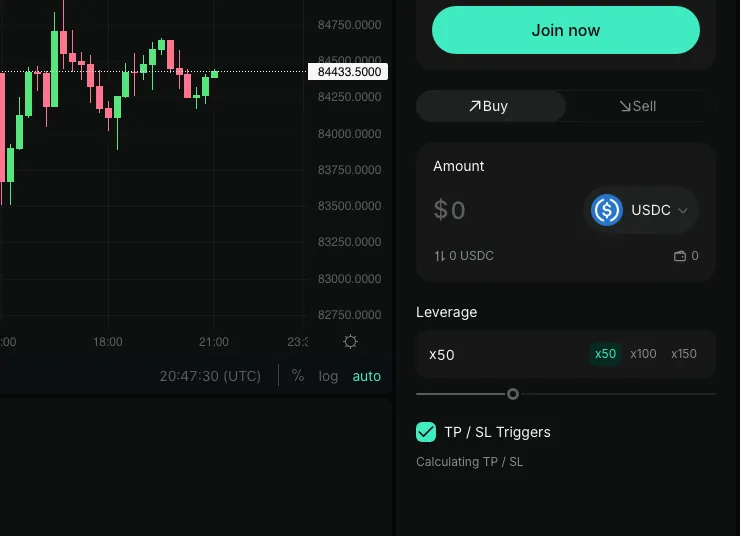
Put margin in the SOL default leverage is 20x, lower than on most coins, and the slider reaches 150x.
SOL: Buy or Sell
Buy is a long, Sell is a short. Set TP / SL Triggers first if you want exits in place; the order is filled at market.
Mind the funding gap
SOL longs pay 0.016% and shorts 0.0103% per hour, so the side you choose changes the carry.
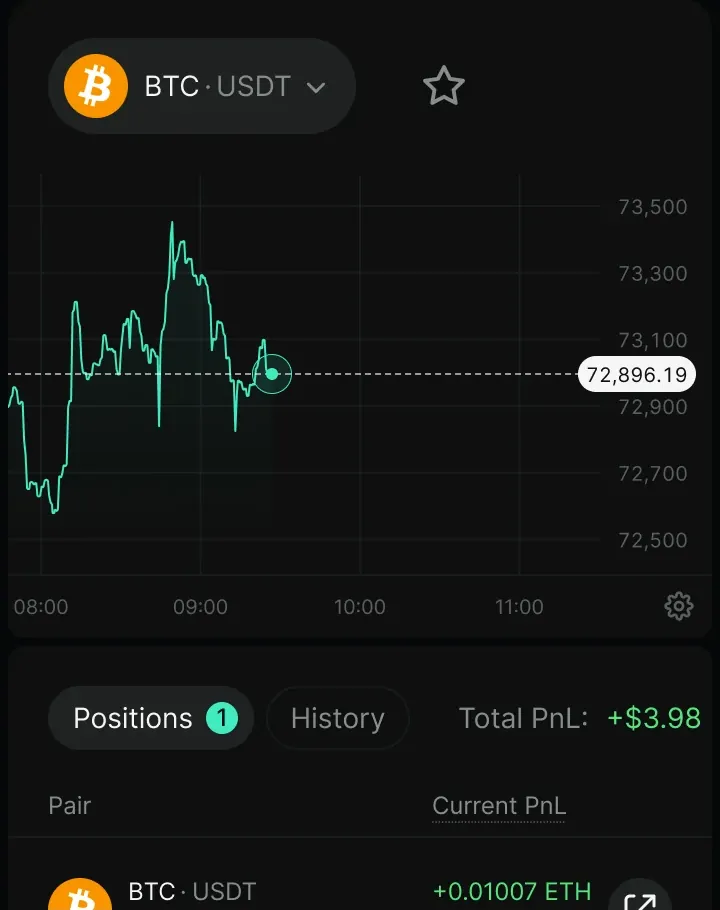


Leverage works both ways: a small move against you can lose you the whole margin.
When Solana trades
SOL trades 24/7. Much of its volume comes from on-chain activity that peaks in US and Asian evenings, so big moves often land outside European working hours.
SOL example: an 8% move
Solana can move 8% in a session. With $100 margin at 10x, the table shows the result for a long and a short and the cost of holding one day.
SOL worked example
| Solana trade | Amount |
|---|---|
| SOL margin | $100 |
| SOL leverage | 10x |
| SOL position size | $1,000 |
| SOL fee, open + close | $1.60 |
| SOL funding per 24 h, long / short | $3.84 / $2.47 |
| SOL +8% | SOL long +$80.00 (+80% of margin), SOL short −$80.00 |
| SOL −8% | SOL long −$80.00, SOL short +$80.00 (+80% of margin) |
| SOL liquidation | not modelled |
Solana risks to know
- At 100x, a 1% move against you equals your entire margin before fees.
- Outage headlines can move SOL double digits in hours.
- Funding is charged to both sides and is higher on longs.
SOL combines high leverage with large swings.
Solana FAQ
Can I short Solana?
Yes. Sell on SOL · USDT opens a short that gains when SOL falls.
What is the leverage range on SOL?
5x to 150x, with 20x as the default.
How much does a SOL trade cost?
0.08% to open and 0.08% to close, plus hourly funding: 0.016% long, 0.0103% short.
Can I use SOL as margin?
Yes. SOL is one of six margin tokens, alongside USDT, USDC, BTC, ETH and BNB.
Why is SOL default leverage lower?
The tariff sets 20x as the SOL default, below the 50x common on other coins, while the ceiling stays at 150x.
Leverage works both ways: a small move against you can lose you the whole margin.