How to trade Ethereum (ETH)
On BRVX, Ethereum trades as a ETH/USDT perpetual you can buy or sell with 5x–100x leverage on ETH and a 0.08% fee each way. It is a price contract: you profit when ETH moves your way and lose when it does not, without holding ether.
- 100x Max leverage on ETH
- 0.08% Fee per side on ETH
- 0.016% / 0.0103% Funding long / short on ETH
- 6 Margin tokens for ETH
Ethereum guide contents
What an Ethereum perpetual is
Ether is the native asset of the Ethereum network, where most DeFi, stablecoins and tokens settle. Its price often moves in step with bitcoin but with larger swings in both directions.
The ETH perp on BRVX follows the ether price with no expiry. You never own ETH through it and never pay gas.
What moves the ETH price
ETH has drivers of its own on top of the general crypto mood.
- Network activity and fee burn, which shift how much new ether enters circulation.
- Spot ether ETF flows and staking yields that compete with holding cash.
- The ETH/BTC ratio: when traders rotate out of bitcoin into smaller coins, ether usually moves first.
Long or short Ethereum?
An ETH long backs growth in on-chain activity and ETF demand, often expressed as ether outperforming bitcoin.
An ETH short bets that ether lags when capital retreats to bitcoin, or that network fees and burn stay low.
Opening an ETH position on BRVX
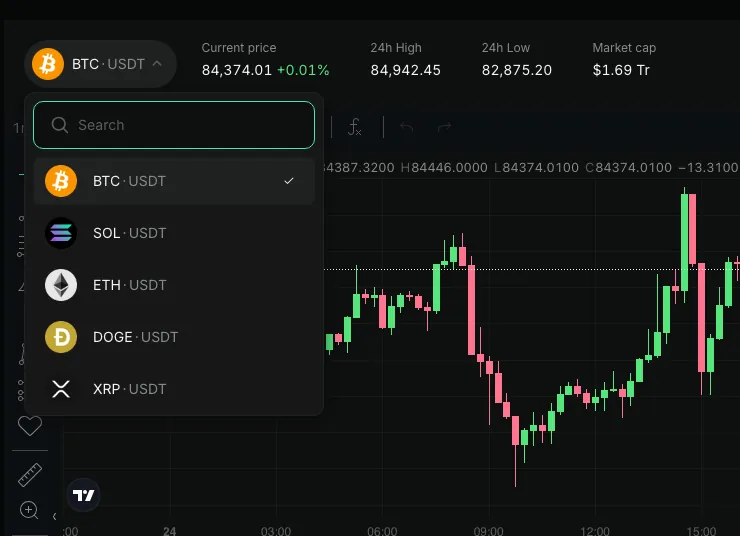
Select ETH · USDT
In the app's pair selector, open the crypto group and choose ETH.
Size the ETH position
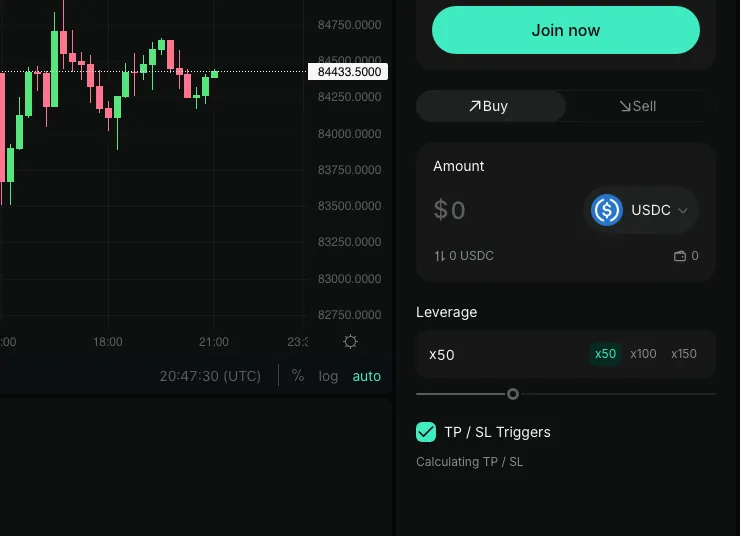
Enter an amount in the form defaults to USDC. Then drag leverage between 5x and 100x.
ETH: Buy or Sell
Buy if you think ether climbs, Sell if you think it drops. Add a take-profit and stop-loss with the TP / SL Triggers box; the order fills at market.
Hold or close ETH
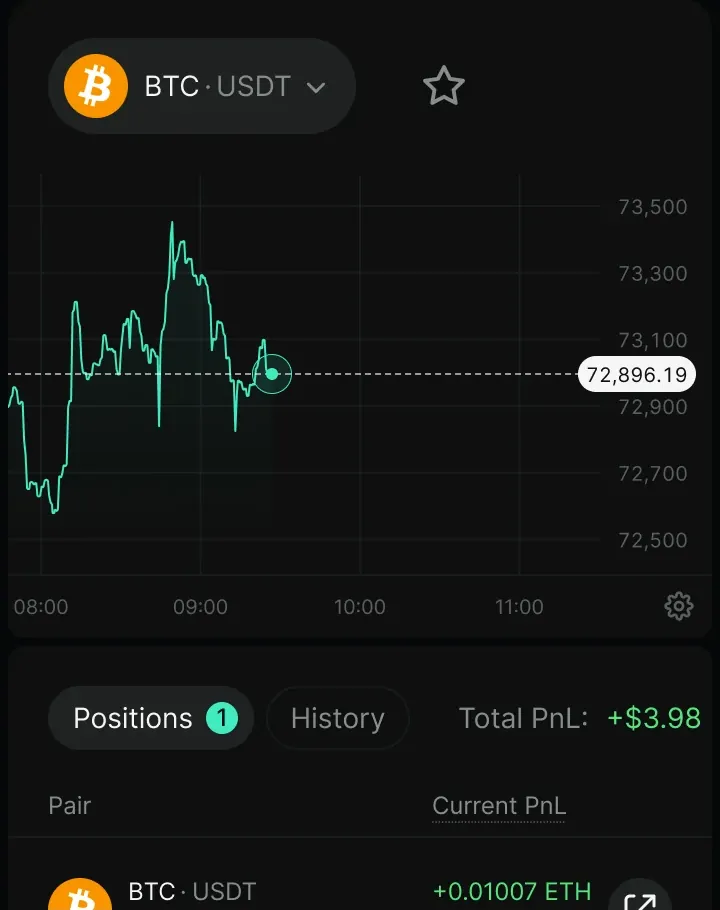
Close from the Positions tab at any time. On ETH longs pay 0.016% and shorts 0.0103% per hour.


Leverage works both ways: a small move against you can lose you the whole margin.
When Ethereum trades
Ether trades 24/7 on BRVX, like on every crypto venue. Network upgrades and large token unlocks are scheduled events worth checking before you hold a leveraged ETH position over them.
ETH example: a 6% move
Ether moving 6% in a day is not rare. With $100 margin at 10x, here is the result for each side and the cost of holding for a day at the current ETH rates.
ETH worked example
| Ethereum trade | Amount |
|---|---|
| ETH margin | $100 |
| ETH leverage | 10x |
| ETH position size | $1,000 |
| ETH fee, open + close | $1.60 |
| ETH funding per 24 h, long / short | $3.84 / $2.47 |
| ETH +6% | ETH long +$60.00 (+60% of margin), ETH short −$60.00 |
| ETH −6% | ETH long −$60.00, ETH short +$60.00 (+60% of margin) |
| ETH liquidation | not modelled |
Ethereum risks to know
- ETH funding is asymmetric: longs currently pay 0.016% per hour, shorts 0.0103%.
- Sharp moves around network events or ETF news can hit a stop at a worse price than set.
- Correlation with BTC means a bitcoin sell-off usually drags ether down harder.
Ether's volatility is higher than bitcoin's, so the same leverage carries more risk.
Ethereum FAQ
Can I short Ethereum?
Yes. Sell on ETH · USDT opens a short position that profits if ether falls.
How much leverage is available on ETH?
Up to 100x, starting at 5x. The default in the form is 50x.
What fee does BRVX charge on ETH trades?
0.08% of the position size to open and 0.08% to close, the same for long and short.
Do I earn staking rewards on the ETH perp?
No. A perpetual tracks the price only; there is no staking, yield or ownership of ether.
Does ETH move with bitcoin?
Usually, and with bigger swings; the ETH/BTC ratio shows when it leads or lags.
Leverage works both ways: a small move against you can lose you the whole margin.